
March Foraging: The Story of Scurvy Grass

Scurvy grass is a relative of sea kale and has long been associated with long-distance sailors and scurvy, a disease caused by a severe deficiency in Vitamin C that killed more than two million sailors between the 16th and 18th centuries. I recently delved a little deeper into the fascinating history of this often overlooked edible...

Scurvy amongst sailors

On lengthy voyages, a loss of half the crew to this disease became expected and in extreme cases it could be much worse. Out living the disease didn’t mean you weren’t scared by it, with surviving sailors coming home with no hair or teeth. Navy surgeons scrambled to find a cure, as 18th-century science was ill equipped for the challenge. At this time, the field was dominated by Hippocrates, 2,000-year-old theories of balancing the four humors. It is known today that a lack of dietary Vitamin C causes scurvy, but vitamins weren’t discovered until the 20th century. 

It took a young scotsman by the name of James Lind to begin looking at diet as a revolutionary cure for the disease. He read the accounts of early explorers in North America who noticed that Native American seamen supplemented their diet of dried meat with pine needle tea. A century earlier, an East Indian company noted that citrus fruit, particularly lemons, had a dramatic effect on patient recovery.


Lemon juice runs dry

This led to Lind conducting what has since been recognised as the first ever randomised clinical trial. This revealed that diet, particularly a diet of citrus fruit, played a role in the prevention of scurvy and also provided a practical remedy. News spread fast amongst the naval community and a mandate of the juice of one lemon per day was given to every sailor, banishing scurvy immediately.

However, the Navy board had to source a tremendous amount of gallons of lemon juice in order to medicate its whole crew and lemon juice came from lemons, lemons came from Spain and at the time Spain was at war with England. An alternative needed to be found, quick. For a short period of time they switched to limes that could be sourced from British possessions in the Caribbean, but it quickly become clear that the logistics were unsustainable and a local plentiful alternative needed to be found.

Cue survy grass

Scurvy grass was soon heralded as the new prevention and cure. It ticked all the boxes; inexpensive/free, plentiful, easy to identify, located on beaches, cliffs and salt marshes and present all year round. It was salted down by the vat-load and boarded onto ships for easy storage and transpiration, and if the crew ran out they could easily hop ashore and forage some more in case of emergencies.

It’s this legacy that has given scurvy grass not only its name but also its place in historical foraging guides. Knowing how to search this plant out and correctly identify it was quite literally the matter of life and death in times gone by. However, modern foraging guides will choose to omit it claiming that its flavour is too powerful, giving it unpopular reviews.

Our love of spice

It’s undeniable that many of the flavours and textures of wild foods can be challenging for our modern palettes. We have been raised on cultivated crops that have been bred for years to be tamer and sweeter in flavour than their ancestral wild plants. We look to the flora abroad to give us the heat, sour and aromatic flavours that make food interesting and we import them in their millions to fill little spice jars in our kitchen. In 2019, the UK imported 120 million dollars of spices, making it the fifth largest importer of spices in the world. Seemingly, the UK loves their spice! Which always makes me wonder why we don’t make better use of the strongly flavoured, health-giving plants that grow plentifully on our soil.

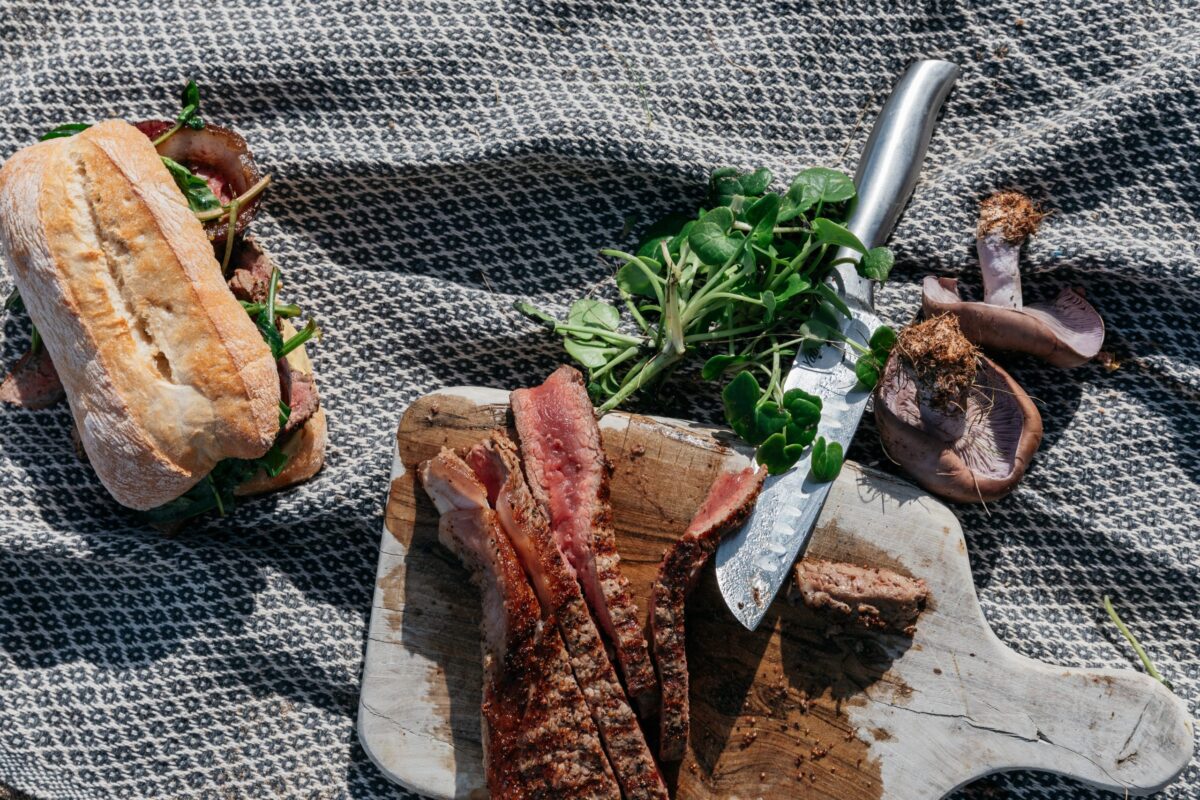
The answer of course, is that we have lost both the knowledge and skill as a civilisation on how to identify, process and use these wonderfully flavourful and medicinal plants. Scurvy grass is one such underused plant, in my opinion. Admittedly, a mouthful of the mature dark green, fleshy leaves will blow your socks off but a nibble from the young fresh leaf growth, paired with complimentary food such as steak, provides a decent heat akin to mustard, wasabi, watercress or horseradish. It baffles me why it isn’t used more.

Using this edible today

If I were to roast a whole horseradish or wasabi root and serve it to you, I would expect some complaints, but when used correctly as a condiment they earn their right on the table and can pull a selection of ingredients together into a well balanced dish. The same applies with scurvy grass. It is to be used sparingly in pestos and salads, or as a spice.

You’re not going to use these leaves as a salad base but toss a couple of small young leaves into a salad and serve on top of a steak sandwich and you have yourself something special.

Book a Visit

Get in touch today to arrange a visit.
We're excited to meet you!

    Any questions?

    Get in touch with your enquiry about
    West Carclaze Garden Village.
    We'll be happy to assist.

      Press Enquiry

      We'd be happy to help with any press enquiries.